
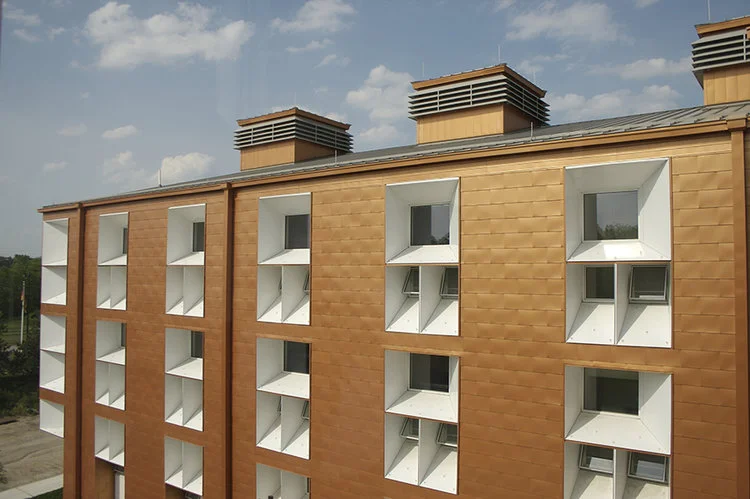
Design Assist Impacts Project Delivery

Judson_1.jpg

In recent years, a trend toward early integration of the design/build process has developed into what is now called design assist.

In this process, the precast concrete producer is selected based on qualifications for executing the demands of the specific project, PCI Certification, and the capability for technical expertise to assist the design and construction team in the development of the project. A contract is then awarded and should, at a minimum, include compensation for the design assistance. Significant benefits can be achieved if the contract also includes the supply and installation of the final products.

Benefits of design assist include development of concrete mixtures and finishes during the development process rather than going through a sample approval process after bid and award. Requests for information are eliminated with the precast supplier as a participating member of the design team. Precast erection drawings are prepared as design development nears completion, leading to a much smoother shop drawing review process. The structural design of the precast panel connections are completed in collaboration with the Engineer of Record to assure coordination with the design of the supporting and bracing structural system. The construction schedule is coordinated with the precast production schedule to assure timely delivery and installation. Any activity that normally occurs after award in a typical bid/build arrangement would be coordinated much earlier when the total precast contract is executed shortly after the design and construction team is assembled.

Precasters can offer detailed expertise that allows for expedited development of the design with engineering innovations and scheduling improvements while enhancing aesthetics and controlling budgets from conceptual design to project completion. Each element can be made as cost-effective as possible, taking advantage of the inherent performance characteristics of precast concrete. The precaster will be able to contribute design and detailing suggestions to ensure that maximum efficiency is achieved at the lowest erected cost. The result should be a functionally efficient and aesthetically pleasing enclosure that meets or exceeds the expectations for the project. Finally, the precaster should be considered as a partner on the design team. This will impose a responsibility on the precaster to understand related construction materials that must interface with the precast concrete so details appropriate to all the materials can be developed.

- Information courtesy of PCI

CarbonCast High Performance Insulated Wall Panels

HPIWP.jpg

Precast wall systems that are lighter, better insulating and more sustainable

You can design and build with lighter, continuously insulated, truly sustainable, and more energy-efficient precast wall panels using CarbonCast technology.

CarbonCast Enclosure Systems use advanced technology to improve precast concrete by integrating ultra-strong, non-corrosive C-GRID into wall panels during fabrication. By taking the place of steel reinforcement, C-GRID provides a multitude of benefits that makes factory-made precast concrete an even more intelligent choice for building envelopes.

Depending on design, CarbonCast panels are priced competitively with other curtainwall systems, such as brick-veneered, masonry, stud walls, or concrete. And after factoring in reductions to superstructure requirements and potential HVAC system and operating savings, CarbonCast enclosure systems can help pay for themselves immediately.

Benefits of CarbonCast Enclosure Systems

  • Full composite action for load bearing performance

  • Continuous insulation to meet ASHRAE requirements

  • Aesthetic versatility

Markets

  • Multi-Family

  • Commercial

  • Industrial

  • Education

  • Hospitality

  • Student living

  • Healthcare

  • Institutional

C-GRID.jpg

Energy Efficient and Lighter in Weight
The exceptional bonding and strength of C-GRID trusses allow AltusGroup precasters to use less concrete and more insulating foam to reduce energy use and create lighter panels. They deliver superior insulation values for enhanced thermal efficiency and reduced energy expenditures.

Superior at Load Bearing
Vertical panels are available for both load bearing and non-structural applications. They can eliminate the need for perimeter columns and add to usable floor space.

Dry, Mold-Free and Non-Combustible
Unlike brick and block insulated cavity walls or brick with steel studs, concrete does not allow water to penetrate, eliminating the need for a rain screen design. CarbonCast panels have no voids or cavities where air or water can combine to support mold and mildew growth. When properly designed, they virtually eliminate the possibility for in-wall condensation. And the inherent fire resistance of concrete provides additional peace of mind.

Ideal for Occupant Comfort
CarbonCast High Performance Insulated Wall Panels provide an acoustic isolating environment. Very little sound is transmitted through the walls, which can provide an interior free of exterior noise. And the lack of cold spots provides a more comfortable environment.

Pre-Finished on the Inside Wall
These panels can have a troweled interior finish to eliminate the cost and time to install drywall or other surfaces. They are ready for paint or wall covering and are ultra-durable.

We are very excited about this innovative system and how it is changing the built environment for the better.

Find more information about CarbonCast here.