
Meet the Mid-States Safety Team

Although Safety Week is really every week here at Mid-States Concrete Industries, the nationally-recognized Construction Safety Week is May 5 to May 9 this year. And since safety is above all else at Mid-States Concrete, we recognize Safety Week by spotlighting our current safety team.

Hannah Martensen, Director of Safety and Human Resources
While Hannah is technically new to the safety team, she has been working with the safety team for more than five years managing workplace injuries, incident responses and corrective actions. As Safety and Human Resources are both focused on taking care of people, when the opportunity to lead both teams presented itself Hannah jumped right on board.

“Nothing is more important than our teammates going home to their families at the end of the day,” Hannah said. “When you look at the big picture, if we aren’t working safely, nothing across the company clicks in - it’s our foundation.”

Hannah is extremely proud of our OSHA SHARP status and the commitment at every level of our organization to keeping our team healthy and safe. In the coming months, she is excited to roll out KPA Flex - an online safety program that is going to bring us to a new level. It is a digital platform for tracking everything - near misses, incident investigations, audits, and safety training records.

Tracy Miller, Safety Manager
Tracy has been part of the Mid-States Concrete team for nearly 12 years. She started as an assistant for continuous improvement, which meant creating lots of processes. Safety was something she always followed and understood the importance of PPE, procedures, and protocols. And over time, through firsthand experience, she began to truly understand the “why” behind the rules.

“I saw one person’s actions could impact an entire team, and how a strong safety culture protects not just the individuals, but families and communities,” Tracy said. “My safety journey is ongoing, and I’m committed to growing, learning, and leading by example.”

Tracy thinks it is important for organizations like ours to have an environment where people feel empowered to raise concerns, where near misses are learning opportunities, and where everyone goes home safely, every day.

“Safety, to me, is more than a policy or checklist - it’s a mindset and responsibility to do the right thing when no one else is watching,” Tracy said.

Knowing it takes a team effort to achieve, Tracy is extremely proud to have the South Beloit plant OSHA SHARP certified. The plant first received the designation in 2017 and has held onto it every year since. She is excited to work toward getting our other plants OSHA SHARP certified, as well as to continue to look for innovative ways to improve processes and safety.

“I am most proud of the safety culture that has been created here,” Tracy said. “We are one team. Everyone looks out for each other.”

Jack MacDougall, Safety Specialist
Jack has been part of the Mid-States Concrete safety team for two years. He started with Mid-States as an intern, after “falling into safety” while still a student. As a student he wasn’t quite sure what he wanted to do, but after hearing some friends talk about their safety classes, he tried some classes himself. Feeling like it was something he could excel in, his safety career began.

“I knew when I first went into safety that I wanted to go somewhere that is very much in need of safety,” Jack said. “I knew I wanted to be more hands on rather than sitting at a desk and writing policies and procedures all day. Precast has its own niche of hazards and most of the things that we work with, whether that be sharp objects, chemicals, tens of thousands of pounds of concrete slabs, or equipment, make it a constant battle of trying to identify hazards before something happens. It forces us to be hands on and out on the production floor working with team members to find the best solutions for them.”

In his time with Mid-States, Jack is most proud of the fact that we have a team committed to keeping everyone safe. If someone brings up a potential hazard, the team is on it and talking to team members to come up with the best solution. Jack is proud that we are a team that works with team members and their concerns, rather than working just to stay compliant.

He also takes pride in being part of the recent OSHA SHARP renewal process, a designation that not many precast companies receive. He added the program shows our team members company-wide that we are committed to doing what we can to make sure they are equipped with everything they need.

“(OSHA is) willing to work with us because we have a great track record of correcting hazards as soon as possible,” Jack said.

Partner with Mid-States for your Storm Shelter Projects

Marshalltown (IA) High School: an 8,000-square-foot building with locker rooms, concession area, and a tornado-safe room.

As extreme weather events occur more often, storm shelter construction has become part of all kinds of community construction projects, like 911 call stations; emergency operations centers; fire, rescue, and ambulance stations; police stations; and K-12 school buildings with an occupant load of 50 or more, which are subject to the International Code Council (ICC) and the National Storm Shelter Association Standard for the Design and Construction of Storm Shelters.

When extreme weather threatens, individuals and communities need structurally sound storm shelters to provide protection.

  1. Structural Integrity
    Precast concrete provides the structural integrity necessary to provide trustworthy shelter from storms and extreme wind. Precast concrete is able to support loads independently without relying on adjacent support materials or soils.

  2. Extreme Wind Protection
    In the Midwest in particular, we know the changing of the seasons can bring with it heavy storms, high winds, and tornadoes. Precast concrete can provide wind resistance up to 250 mph and resist damage from flying objects and debris, as evidenced in this video.

  3. Access and Entry
    Precast concrete storm shelters can be efficiently designed to have access and entry points comply with ICC Standards.

  4. Fast Installation
    Precast concrete components are scheduled for just-in-time delivery and installed by experienced erectors as pieces arrive. This helps keep projects on schedule and on budget.

  5. Thermal Mass
    Precast concrete’s ability to moderate temperature inside a storm shelter keeps temperatures moderated and manageable for those inside.

  6. Ventilation
    Because precast concrete offers design flexibility, ventilation openings are easily fabricated during the manufacturing process and can be installed to custom specifications.

Among the things designers must consider in the construction of storm shelters is the impact from flying debris and possible wind uplift. Precast concrete addresses both of these things.

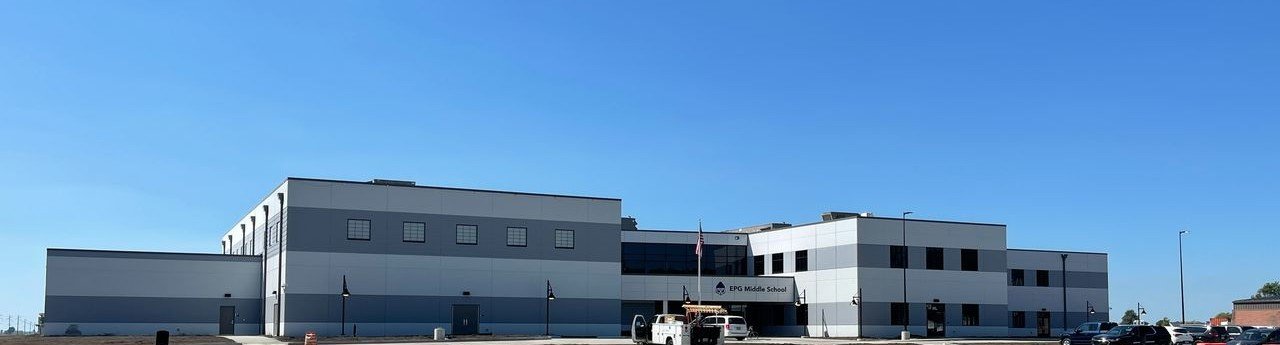
El Paso Gridley Middle School with storm shelter: Gridley, Illinois

Every project offers its own unique goals and opportunities. Our team will ask questions and listen to your objectives and goals so we can apply the latest design and engineering techniques to your projects. We partner with our customers to find the right solutions for their projects.

We recently worked on a storm shelter as part of a school in DeKalb, Illinois with Richard L. Johnson Associates | Architects. The project includes precast concrete wall panels and double tees for the roof system.

“We just find the precast, with the durability and the weight of the precast with the concrete tees, makes sense as a good product for a storm shelter,” said Scott Johnson, Project Architect, Richard L. Johnson Associates | Architects.

When considering building materials, one of the main things that must be considered is that the storm shelter must be able to withstand 250 mile per hour winds. There are not many materials that can easily meet that requirement, but precast concrete can. Johnson likes the ease of use when it comes to precast concrete wall panels because there isn’t a whole lot of difference between designing and manufacturing the wall panels for a storm shelter than designing and manufacturing for any other type of building. The walls have to be a bit thicker, but otherwise it’s really just a matter of where the rebar and insulation goes, Johnson said, adding this makes precast a cost-effective building material.

Johnson added the components are both high quality and reliable as they are manufactured in the controlled setting of the precast plant. Additionally, because all precast components are custom made, our team will work with the design team to coordinate all openings and connection details to meet the needs of the project.

For the DeKalb project, our team worked with Johnson to ensure the best joint detail for the panels of the storm shelter. Wall panel joints larger than 3/4” require additional reinforcement to ensure nothing can penetrate the structure. To meet this requirement, the decision was made to step, or overlap, the walls to eliminate joints larger than 3/4”.

Additionally, when it comes to roofs for storm shelters, components have to be heavy enough that they don’t lift and must all be connected. The roof of a storm shelter can be constructed of either hollow core plank or double tees, depending on span and load. Double tees are ideal for long, column-free space and can provide spans of more than 100 feet. They also come in a variety of depths. Hollow core plank can span up to 60 feet depending on load. Roofs will always have 4” - 6” of topping as they are required to be heavily reinforced for storm shelters, said Tara Loomis, Sales Engineer for Mid-States Concrete Industries.

Precast concrete also provides “one stop shopping,” as the same precaster can provide both the wall and roof components, as well as complete all the shop drawings, detailing, and erection, decreasing the number of trades needed for the project.

When you partner with Mid-States Concrete Industries for your storm shelter project, we’re with you every step of the way - from preconstruction assessment, design and engineering support through construction and completion. It’s how we’ve done it for nearly 80 years and three generations of family leadership. We are committed to the success of your storm shelter (and other) projects.

“I think once you go through a storm shelter project and use precast for it, you have the knowledge of what to do,” Johnson said. “That’s why we don’t reinvent the wheel and try to do something out of another material. We’d probably stick with precast.”

To learn more about how we can help with your storm shelter project, contact our sales team at sales@msprecast.com.