

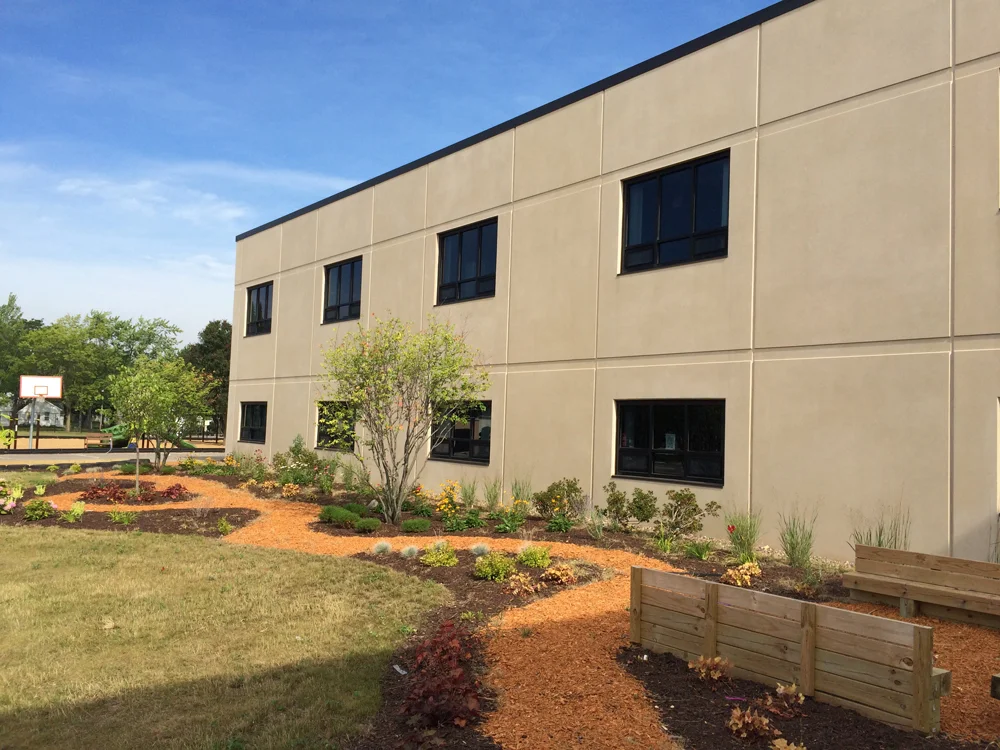
Precast concrete structural and architectural systems help save cost in a variety of ways, from the design phases through construction and throughout the building's service life.
A precast concrete structural system can create the building’s entire framing system. This design approach can take several forms, including precast columns or load-bearing precast walls or hollowcore flooring. It provides a significant number of advantages, especially when panels are included to create the entire building envelope. As a result, this approach is becoming the format of choice for many construction teams.
Among the benefits that a precast concrete structural system can provide are:
High Quality
PCI-Certified precast concrete fabricators must undergo two unannounced annual inspections that review more than 120 production and quality-assurance processes. The tight control ensures components are produced with uniform consistency, finish, and size. This reduces site work required to achieve the final designer and owner approvals and ensures components need little field adjustment, speeding construction to complete the structure’s shell.
Safety
Plant casting keeps the site cleaner and eliminates trades from the construction zone, improving logistics and enhancing worker safety. The ability to provide a clean site is particularly vital on existing sites and in dense urban areas, where adjacent businesses can maintain near-normal activities.
Interior Design Flexibility
Precast concrete systems help buildings adapt to changing client needs. Precast spans can reach as much as 70 feet, providing unique opportunities for challenging interior requirements. Precast also provides high floor-loading capability with little added cost.
Green Design
Precast concrete offers a number of environmental benefits. It can be produced locally and creates no jobsite waste. Cement reducers such as fly ash and other admixtures also aid environmental friendliness. And its high durability gives it a total service life that outpaces designs using other building materials.
Tight Floor-To-Floor Heights
Precast concrete systems sometimes fit within alternative system depths but shouldn’t add more than approximately 8 inches to each floor level, creating an approximate 5% increase in exterior wall material. This slight addition is easily overcome by working with the precaster to make effective use of the overall floor-plan shape and using the benefits precast provides in repetition of component fabrication.
~ Information provided courtesy of PCI.
